



Chaga Mushroom Powder · Immune Support · 60g or 120g
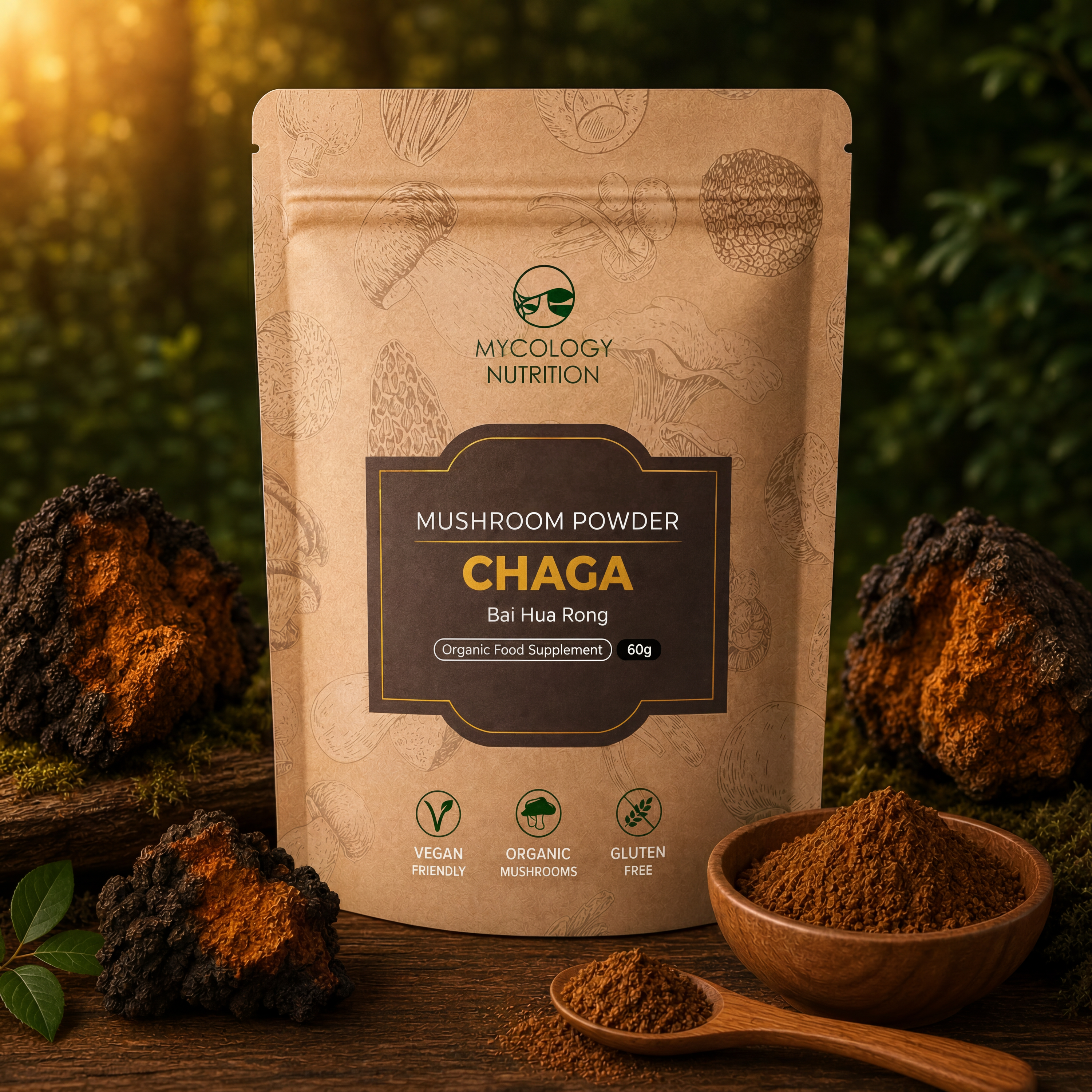
Chaga powder is the quick way to make Chaga tea: stir it into hot water for a dark, earthy mug with a soft hint of vanilla and none of Reishi's bitterness. Our Chaga is wild-harvested from birch, and the powder also works well in coffee, hot chocolate and smoothies.
- Wild-harvested Chaga
- Mild, earthy taste
- Lab tested
- Regular price
-
£26.99 - Regular price
-
- Sale price
-
£26.99
Couldn't load pickup availability


Chaga
Chaga grows almost only on birch trees in cold northern forests, from Scandinavia to Siberia. It grows slowly, and a single lump can take many years to reach a size worth harvesting. During wartime coffee shortages in Finland, people brewed Chaga as a coffee substitute, and in parts of Russia it has long been an everyday tea. The outside looks like burnt charcoal, but the inside is a surprising golden orange.
Key facts
- Mushroom
- Chaga (Inonotus obliquus), also called Bai Hua Rong
- Format
- Mushroom powder
- Taste
- Mild and earthy, hint of vanilla
- Source
- Wild-harvested from birch
- How to use
- Stir into hot water, coffee or smoothies
- Tested
- Lab tested
Chaga mushroom powder: a quick cup of Chaga tea
What does Chaga powder taste like?
Gentle. Chaga powder has a mild, earthy flavour with a soft hint of vanilla, and it is not bitter like Reishi. That makes it one of the friendlier mushroom powders to drink on its own, and it sits comfortably in coffee or milky drinks too. If you have found other mushroom powders too strong, Chaga is worth a try.
How do I make Chaga tea with powder?
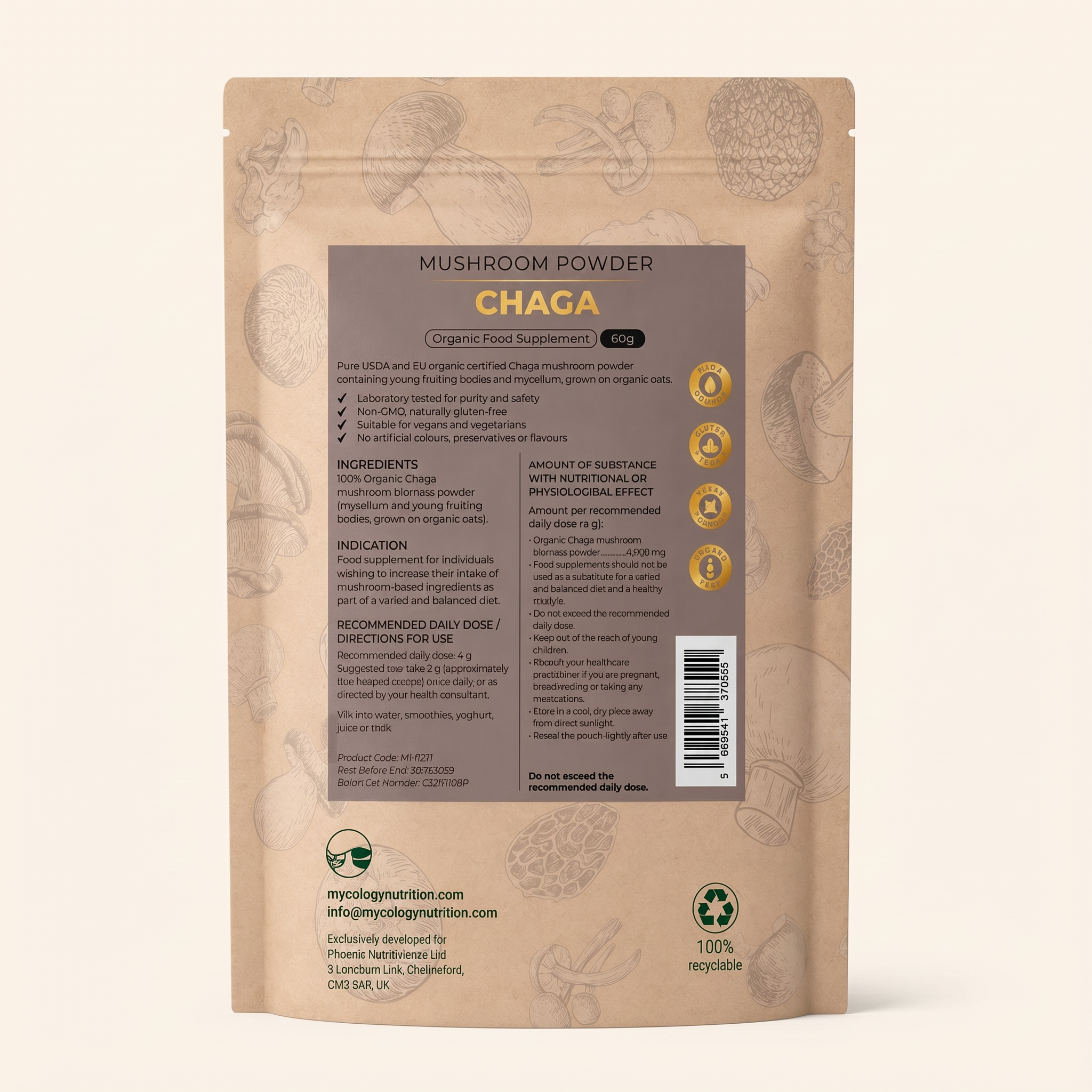
Traditionally, chunks of Chaga are simmered for a long time to make a dark tea. We do not sell chunks, but Chaga powder gives you a much quicker version. Stir the serving on the label into a mug of hot water, stir again, and let it sit for a minute. Add a splash of milk, a little honey or a strip of orange peel if you like. The powder will not fully dissolve, so give it a final stir before the last sip. Some people make a larger batch in a flask for a winter walk.
Other ways to use Chaga powder
- Coffee: Its earthy note pairs well with a filter coffee or a latte.
- Hot chocolate: The vanilla hint works nicely with cocoa on a cold evening.
- Smoothies: Blend with banana, oats and oat milk for a breakfast drink.
- Porridge: Stir into the pan with the oats and top with berries.
Where does Chaga come from?
Chaga grows on birch trees in cold northern forests. From the outside it looks like a lump of burnt charcoal, but inside it is golden orange. It is a sclerotium, a dense mass of fungal growth, rather than a mushroom with a cap. Its Latin name is Inonotus obliquus, and in Chinese it is called Bai Hua Rong. People in Siberia, Russia, Scandinavia and other parts of Northern Europe have brewed Chaga tea through long winters for generations, and it has long been valued in traditional practice there. It naturally contains beta-glucans and other compounds researchers are studying. It is not psychoactive.
Our Chaga is wild-harvested, and our products are lab tested.
60g or 120g?
The 60g pack is £26.99, about £4.50 per 10g, and is a good way to try Chaga tea. The 120g pack is £44, about £3.67 per 10g, which suits a daily mug and means fewer reorders. Keep the powder sealed in a cool, dry place so it does not clump.
Powder or capsules?
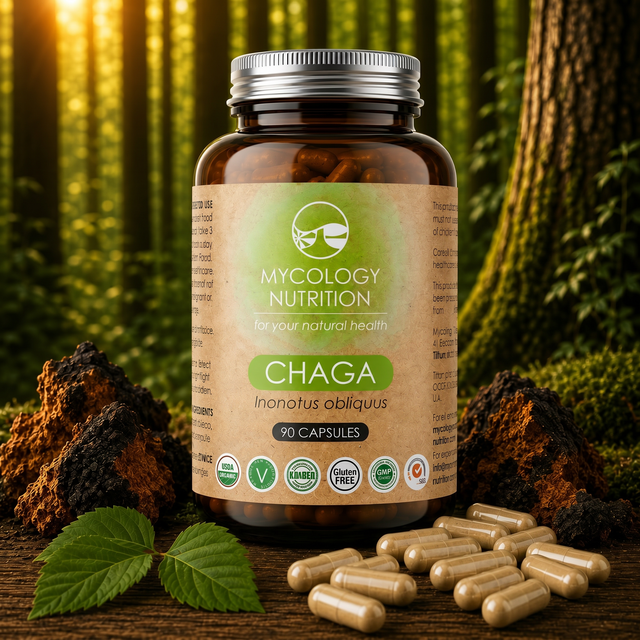
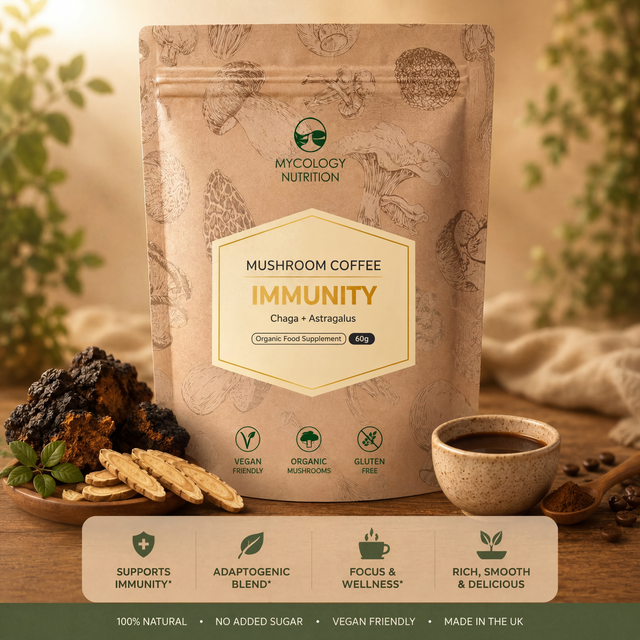
Powder is for people who enjoy the ritual of a warm drink. If you would rather skip the mug, our Chaga capsules come in a pot of 90. For more on mushrooms and how people use them, visit our blog. To pair Chaga with another mushroom, browse the full mushroom powder range. UK delivery is free on orders over £30.
Other ways to take it
Options: 60g bag, £18.49
Questions
How do I make Chaga tea from powder?
Stir the serving on the label into a mug of hot water, let it sit for a minute and stir again. Add milk or honey if you like.
What does Chaga powder taste like?
Mild and earthy with a hint of vanilla. It is not bitter like Reishi.
Can I add Chaga powder to coffee?
Yes. Its earthy flavour works well in filter coffee or a latte. Stir well, as it will not fully dissolve.
Is your Chaga wild-harvested?
Yes. Our Chaga is wild-harvested from birch, and our products are lab tested.
Do you sell Chaga chunks?
No. We sell Chaga as a powder, in capsules, and in our Immunity Mushroom Coffee.
Can I drink Chaga if I am pregnant or on medication?
If you are pregnant, breastfeeding, taking medication or have a medical condition, speak to your GP before taking Chaga. Chaga is naturally high in oxalates, so mention that to your GP as well.
Food supplements should not be used as a substitute for a varied, balanced diet and a healthy lifestyle. Do not exceed the recommended daily intake. If you are pregnant, breastfeeding, taking medication or have a medical condition, speak to your GP before use.